Gobi
A sobriety tracking app
A gamified sobriety app with intuitive, mobile‑first design that helps sober‑curious users track progress, build habits, and celebrate small wins—without the clinical feel.

Client
An exploration of how design can support behavior change and make sobriety feel more engaging, human, and motivating.
Info

Understanding the problem
primary research
To explore the problem, we combined surveys, interviews, and venue observations to understand not only how people drink, but why — and how social environments influence those behaviors.
Venue Observations
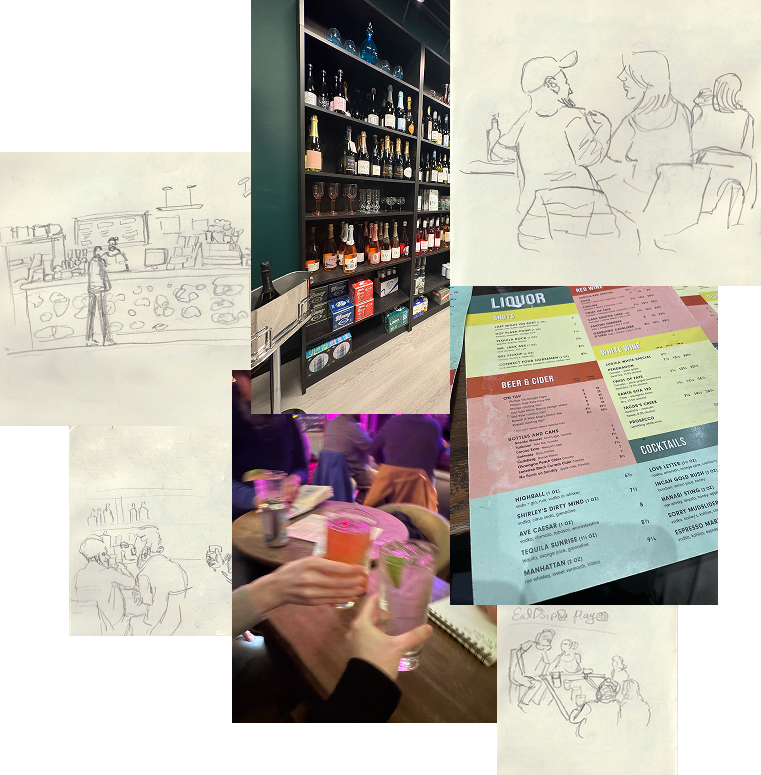
We began with in-context observations, visiting the following locations to understand how people interact within social environments centered around alcohol:
- 🌭Casual Eatery with Mocktails
- 🛍 Non-Alcoholic Retail Space
- 🍻Traditional Bar
- 🎲 Activity-Based Venue (Games + Food)
Observations of social spaces revealed that alcohol is deeply embedded in social environments, making it difficult for individuals to make different choices without feeling excluded or unsupported.
Surveys
Survey data revealed that many participants felt there was a lack of appealing or well-promoted alcohol-free options.
While some were unsure about availability, a majority expressed interest in attending sober-friendly events if they were more engaging and better positioned.
24.1%
of participants thought there were enough alcohol-free events in their area
37.9%
were unsure if there were enough diverse alcohol-free activities nearby
58.6%
would be more likely to attend an alcohol-free event if marketed differently
53.3%
of participants thought alcohol-free drink options could be better.
Interviews
Interviews highlighted that people’s relationship with alcohol is complex and often tied to social habits.
Many participants were not looking to quit entirely, but struggled with consistency and motivation when trying to cut back.
Research Summary
One thing kept surfacing
Solution
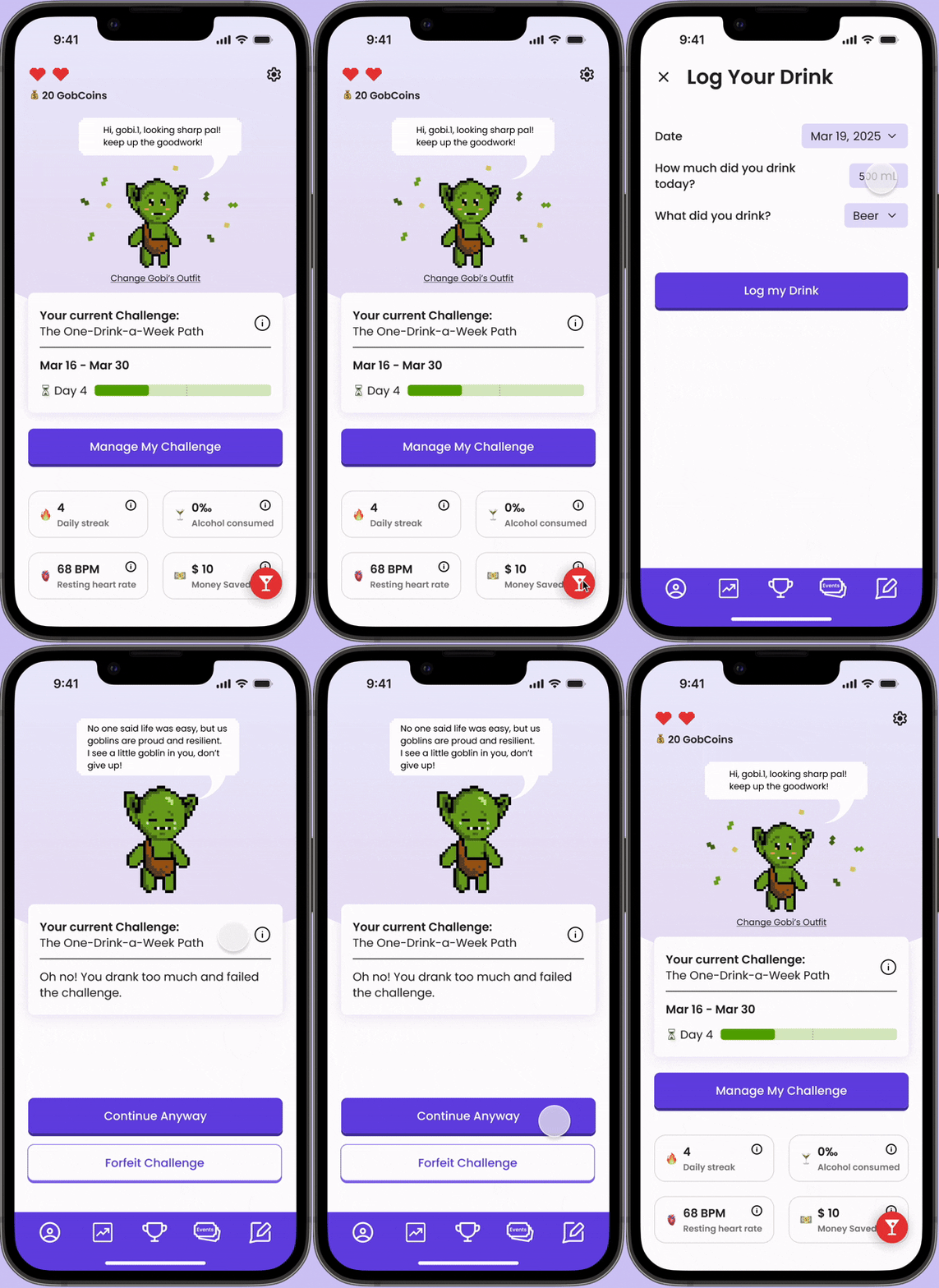
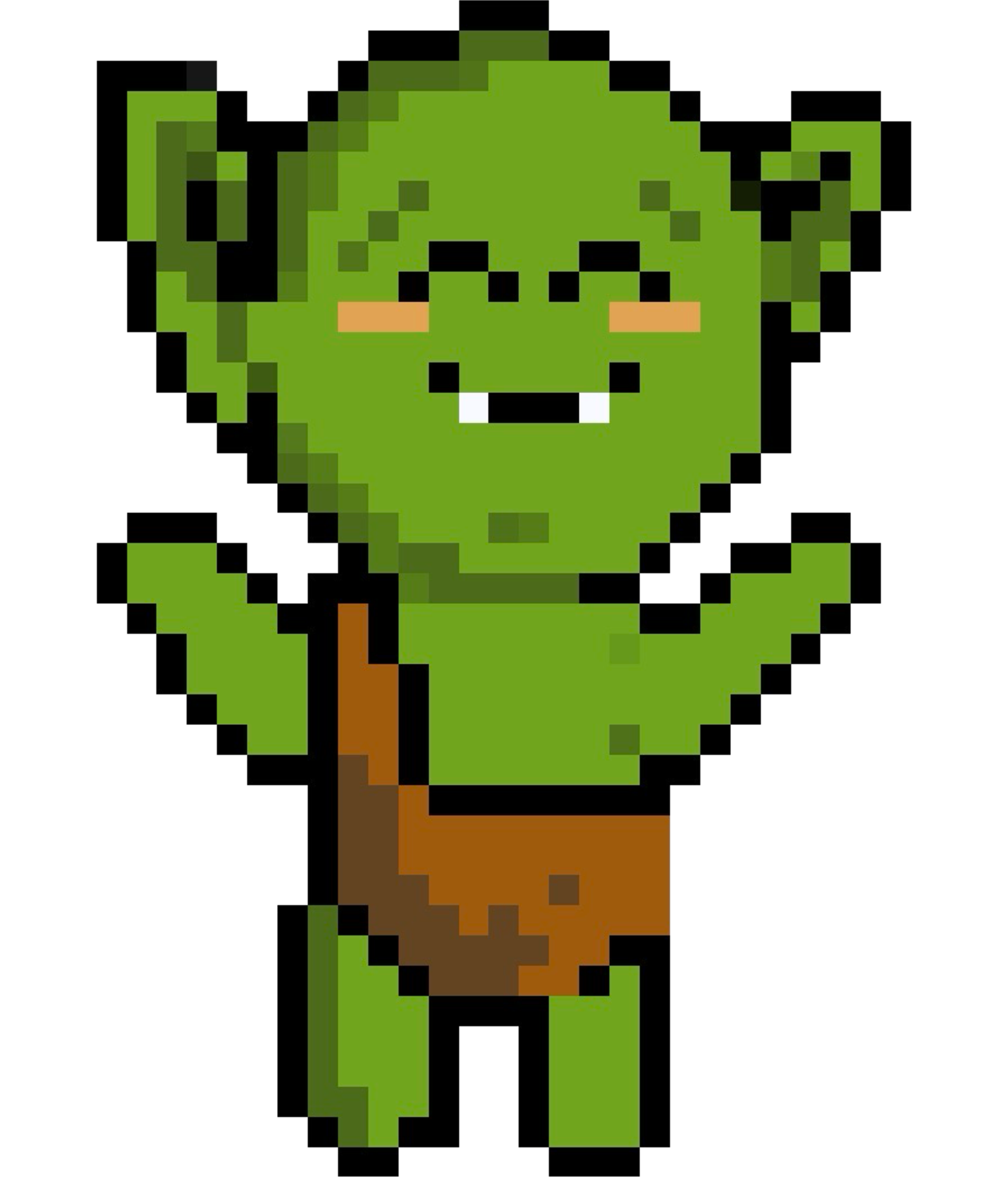
Meet Gobi 💚
Gobi is a goblin — a creature not exactly known for personal growth. They're stubborn, chaotic, and set in their ways… which is exactly why Gobi works. It flips the script: even the most unlikely characters can change — and so can we.
Gobi begins as "Primitive Gobi" — a symbol of starting fresh, unsure, but open to change. As users take on challenges and reflect on their journey, Gobi grows with them — unlocking new looks and milestones that celebrate progress.
Core Design Principles
- Progress over perfection — no shame, just steps forward
- Gamified feedback loops that feel rewarding, not clinical
- Visual identity tied to personal growth milestones
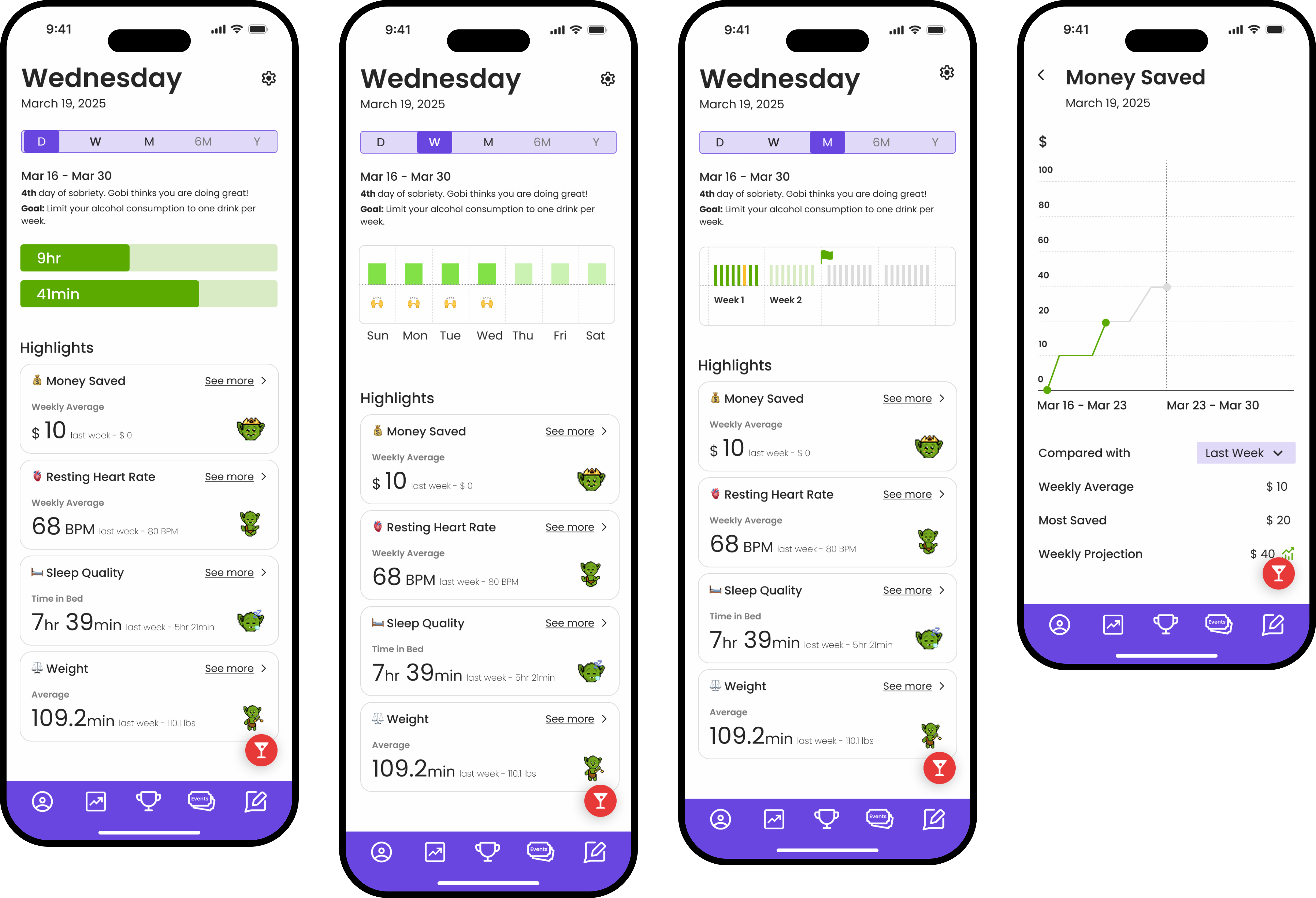
- Measurable wellness metrics (sleep, heart rate, savings)
Key Features
- Personalised challenges (e.g. one drink per week path)
- GobCoins reward system for engagement & reflection
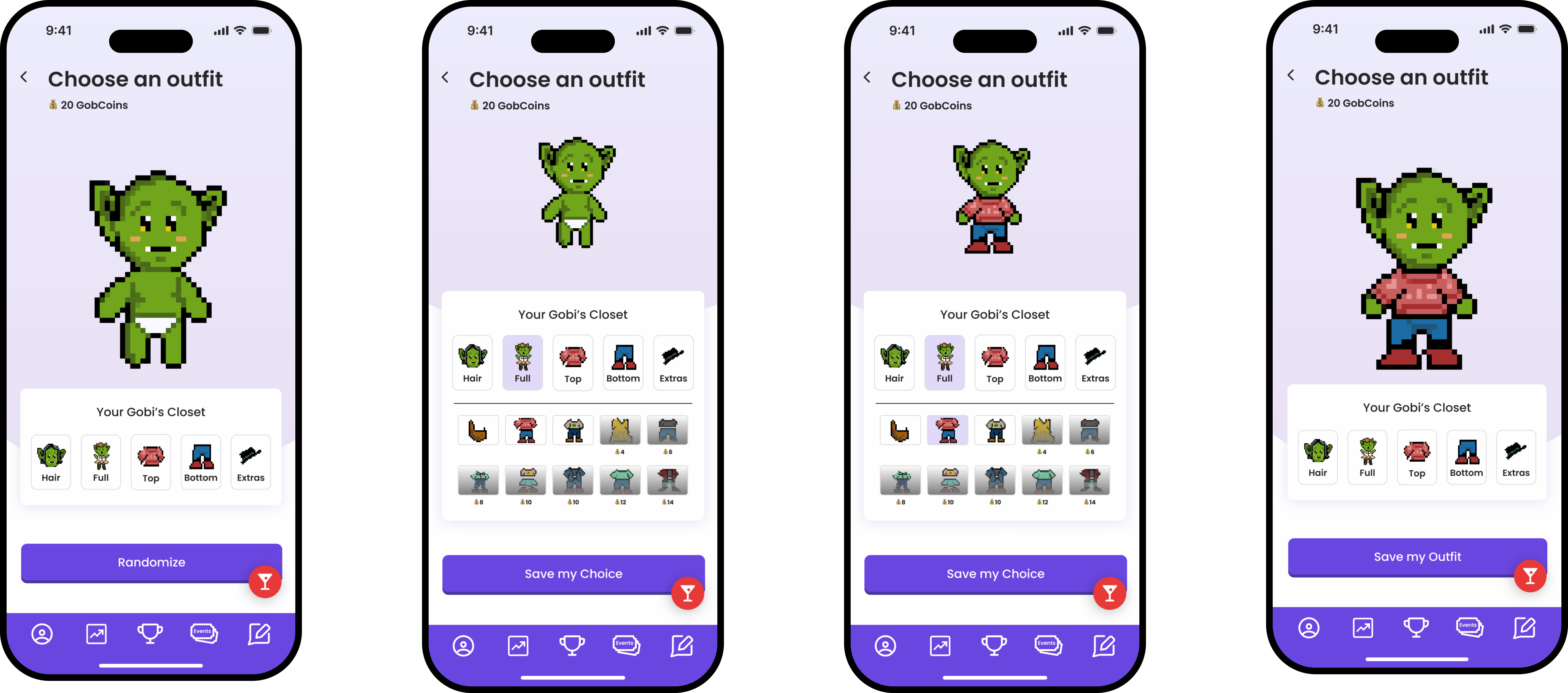
- Gobi avatar that evolves with the user's progress
- Sober-friendly events discovery feed
Wireframing
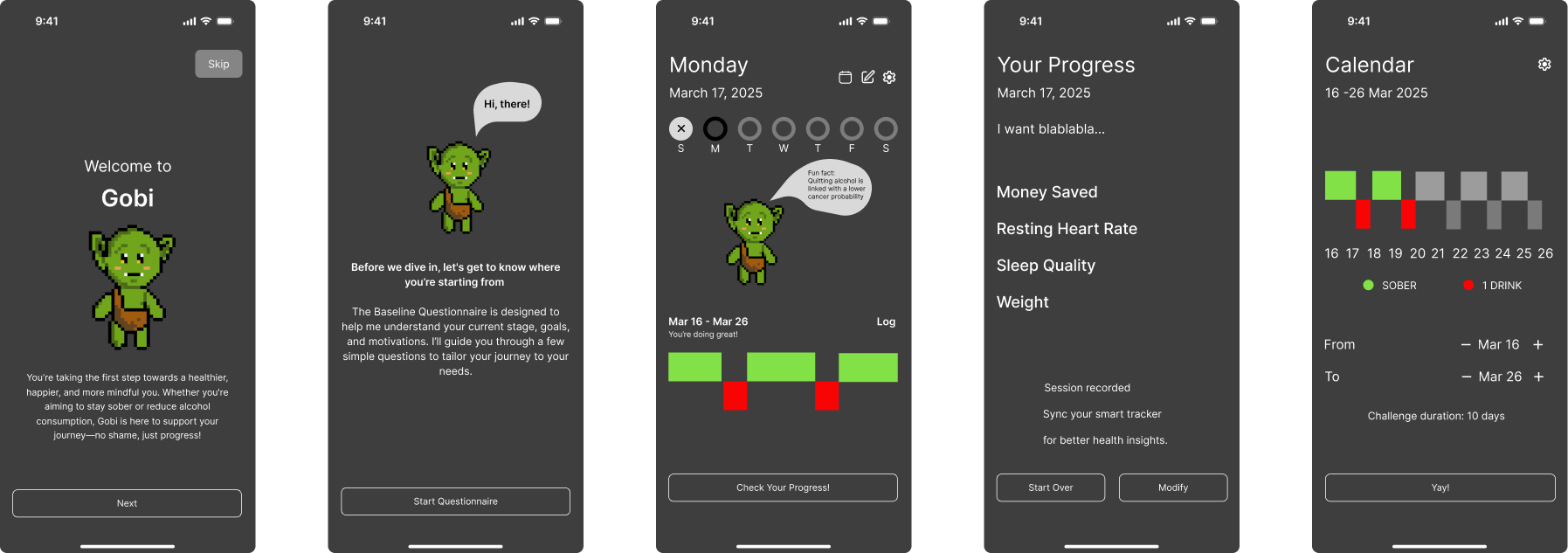
Our wireframe plan for Gobi creates a motivational, gamified experience for users tracking their financial savings and health improvements while quitting alcohol. With personalized coaching styles, challenges, health tracking, and rewards, the app keeps users engaged through data-driven insights and interactive progress tracking.
User Flow

Wireframes
Usability Testing
We utilized a multi-method research approach to understand user motivations and pain points.
- Method: Usability testing via Zoom, standard interviews, converted observations of social spaces, and secondary research.
- Usability Goals: To evaluate interaction flows, identify "dead ends," and gauge the emotional success of our app features.
Key Findings
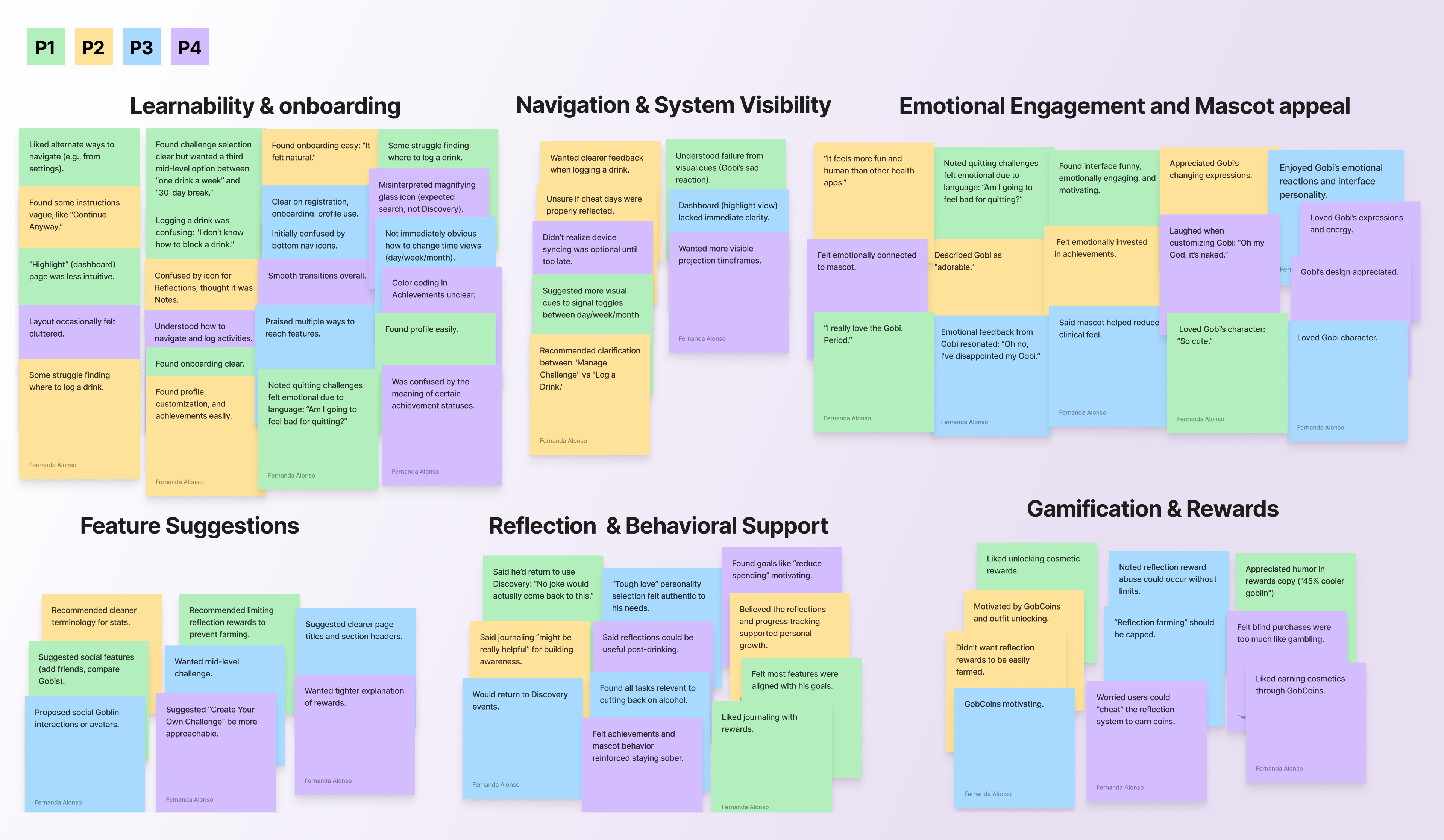
- The Gobi Mascot: Users felt a strong emotional connection to the mascot. Feedback included, "I really love the Gobi," and "I feel like I've disappointed my Gobi," suggesting the mascot effectively reduced the "clinical" feel of tracking.
- Journaling as Motivation: Journaling was seen as a powerful tool for building awareness, especially when tied to emotional triggers.
- The "Farming" Risk: Users flagged that "reflection farming" (writing short, low-quality entries to gain rewards) could be an exploit, leading us to emphasize quality over quantity.
Final Ui
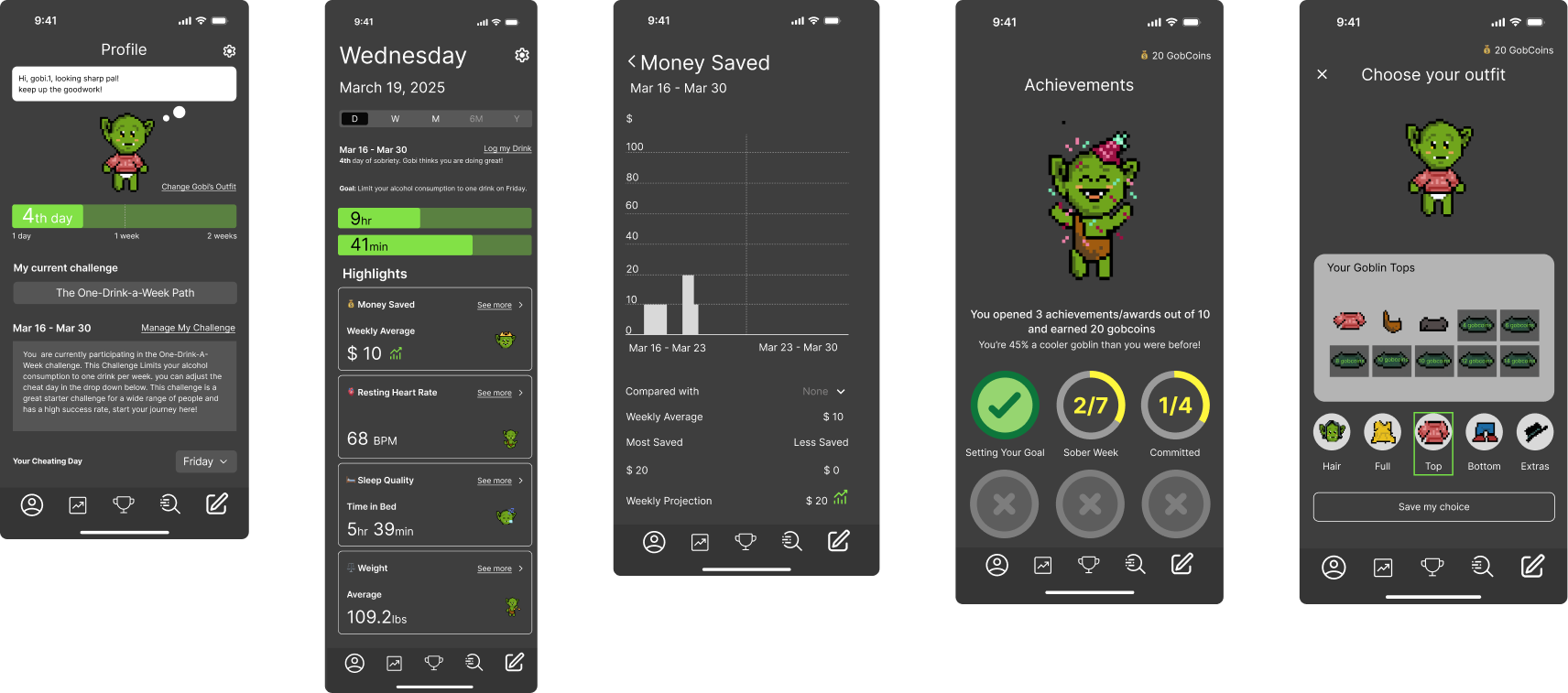
We began the visual design with an established direction — Gobi as the central character of the experience. From there, we aimed to create a clean and minimal interface that wouldn’t overwhelm users, allowing the mascot to remain the emotional focal point of the app.
Profile Page Design
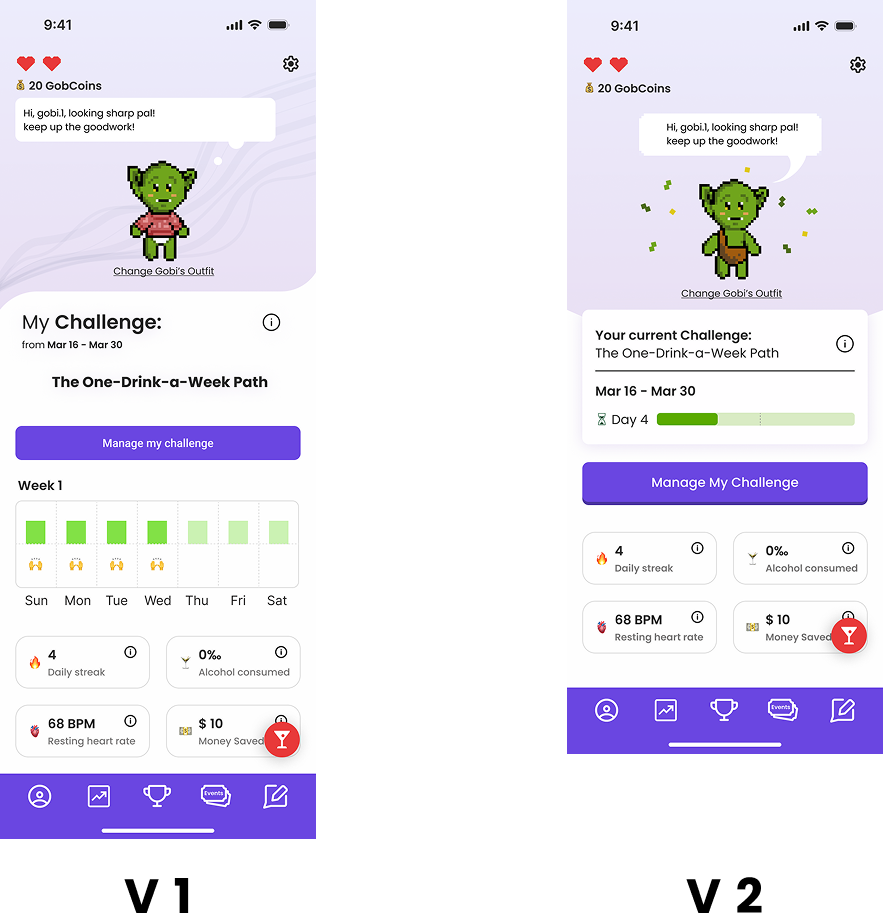
I started by exploring the profile page, developing two layout directions. One focused on a more open composition, while the other prioritized a compact structure with a clearly visible challenge timeline.
As a team, we chose the second direction for its clarity and more efficient use of space, which made progress tracking easier to understand at a glance.
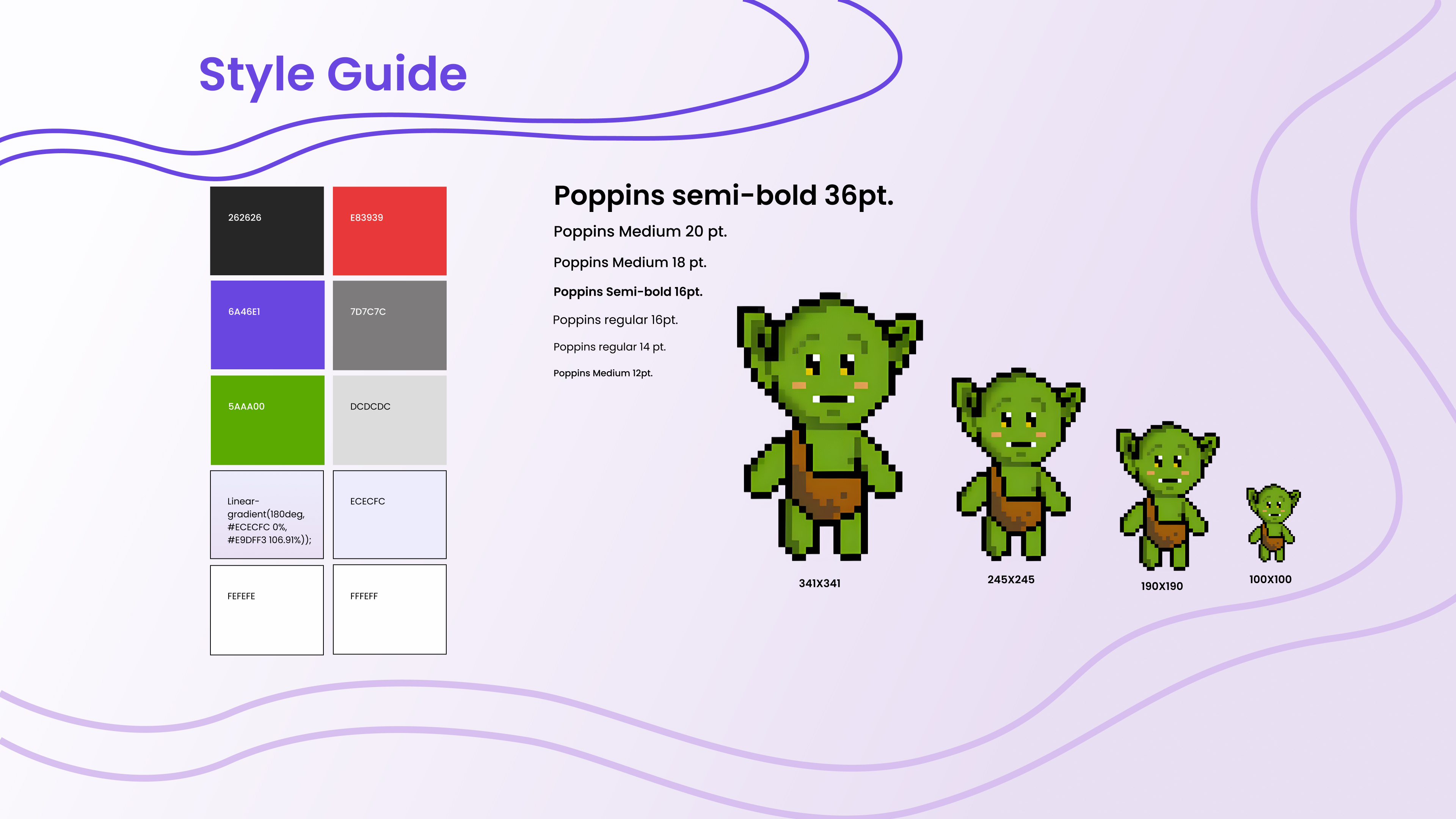
The visual system balances playfulness and structure — pixel-art energy grounded in a clean, legible UI. Poppins provides warmth and readability; the purple-forward palette anchors the brand in a sober-curious, wellness-forward space.
Onboarding & Registration
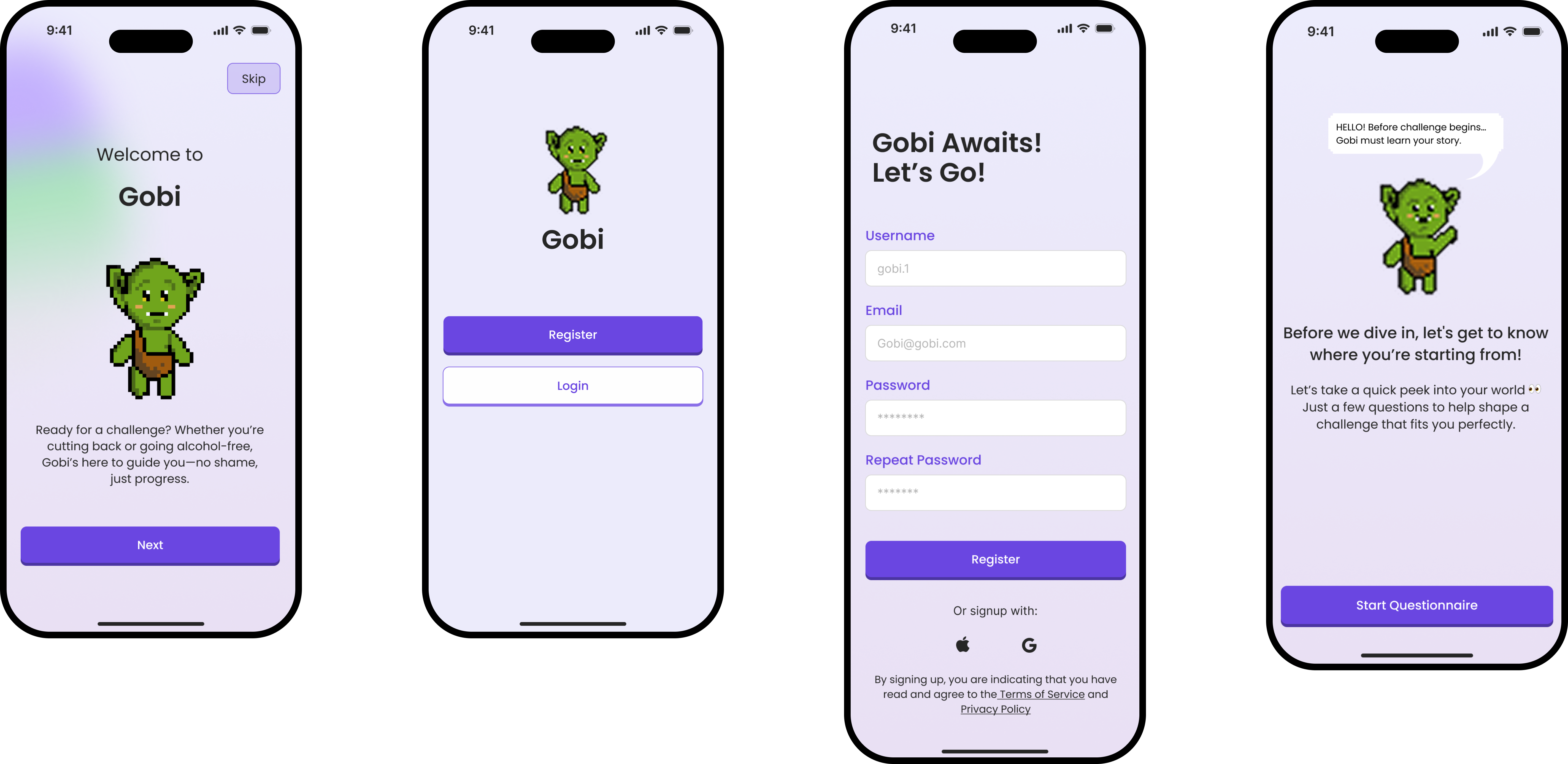
Questionnaire

Tracking Progress
Changing Outfit
The high-fidelity prototype (click to explore the design).
Takeaways
Our initial hypothesis (alcohol-free spaces) was reasonable but surface-level. The research forced a meaningful pivot toward internal motivation — a harder but more impactful design space. Letting go of the original direction early saved us weeks of building the wrong thing.
Gobi the goblin wasn't decoration — it was the emotional core of the entire product. Building the mascot concept early gave every design decision a north star: would this feel right for Gobi? Mascot-first thinking made the UI cohesive in ways that pure systems thinking wouldn't have.
Adding GobCoins, streaks, and avatar customisation creates genuine engagement — but each mechanic needs a clear reason to exist. We learned to ask "what behaviour does this reward?" before adding any gamification layer, to avoid shallow point systems that feel arbitrary.
More Case studies